

Vaccine Technology X
Program Agenda
Schedule at a Glance
Plenary Speakers
Global Regulatory Fireside Chat with Marco Cavaleri, Dean Smith, Phil Krause, Mimi Darko
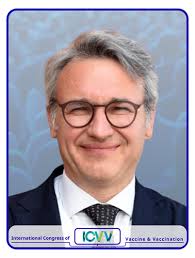
Marco Cavaleri
European Medicines Agency
Panelist




A special highlight of Vaccine Technology Meeting X will be an opening Global Regulatory Fireside Chat, bringing together senior regulatory leaders including Dr. Marco Cavaleri (European Medicines Agency), Dr. Dean K. Smith (Health Canada), Dr. Phil Krause (ex-US FDA), and Dr. Mimi Darko (African Medicines Agency). With decades of experience guiding vaccine evaluation, quality standards, emergency response frameworks, and international regulatory collaboration, these leaders have played key roles in advancing vaccines from development through licensure—most notably during the COVID-19 pandemic and in ongoing preparedness for emerging public health threats. This candid and forward-looking conversation will explore how regulatory science is adapting to support innovation while upholding safety and effectiveness standards, how agencies are navigating global uncertainty, and what developers should anticipate as next-generation platforms, manufacturing models, and access pathways continue to evolve. For scientists, manufacturers, and global health leaders alike, this session offers a valuable opportunity to engage directly with regulators who are helping shape the future of vaccines.
Vaccine Technology X – 20 Years of Vaccine Technology

Colette Ranucci
Merck
Panelist

Piper L. Trelstad
Gates Medical Research Institute
Panelist

Tarit Mukhopadhyay
Merck Infections Disease and Vaccine Discovery
Moderator
Since the first Vaccine Technology Meeting two decades ago, the field has transformed in remarkable ways—driven by breakthroughs that have redefined what is possible in vaccine science and technology. Over this period, we have witnessed the rise of new vaccine platforms, innovations in manufacturing and delivery, and unprecedented responses to global health crises. This special anniversary session provides a unique opportunity to reflect on the journey of the past 20 years, examine where the field stands today, and consider the opportunities and challenges that lie ahead. A distinguished panel of experts will share their perspectives on the scientific, technological, and policy advances that have shaped vaccine development, as well as the lessons learned along the way. The session will conclude with an interactive dialogue, inviting participants to explore together what the next 20 years of vaccine technology might bring—and how we can collectively prepare for the future.
Keynote Speakers

Gian Gandhi
Deputy Director, Immunization, Global Development
Gates Foundation
"Global immunization: Charting a course forward in a period of deep uncertainty"
Global immunization has long stood as a triumph of science and public health, driven by decades of innovation in vaccine research, development, and delivery. Yet the world now stands at a critical inflection point. Over the past two decades, scientific ingenuity—paired with strategic investment and equitable access models—has transformed population health. But the systems and partnerships that fueled these successes are now being tested by converging crises: geopolitical instability, climate shocks, shifting donor priorities, misinformation, and the lingering effects of the COVID-19 pandemic. As traditional models of financing and coordination strain under new pressures, the path forward demands fresh thinking and adaptive leadership. This keynote will take stock of what has worked well—scientific innovation, effective public–private partnerships, sustained global cooperation, innovative financing models, and the rapid introduction of novel vaccines. It will explore how to preserve these achievements while building the agility needed to navigate a rapidly changing world. The talk will chart a course toward maximizing vaccine access and coverage in an era of uncertainty—by reimagining global solidarity, service delivery models, and sustainable financing, and by leveraging data and innovation to sustain and amplify the public health impact of immunization over the next two decades.
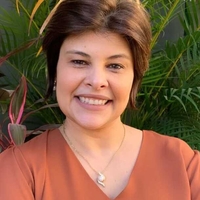
Patricia Neves
Bio-Manguinhos/ FIOCRUZ and University of New South Wales/ Austrália
"Building the First RNA Innovation Ecosystem in Latin America: The Fiocruz Platform Implementation Experience"
This presentation describes our experience during the implementation of the Fiocruz mRNA platform in Brazil and its role in seeding a regional RNA innovation ecosystem in Latin America. The platform integrates end-to-end capabilities, including antigen design, mRNA engineering, lipid nanoparticle formulation, analytical characterization, and Good Manufacturing Practices (GMP) production. Proof of concept has been demonstrated through the development of a Brazilian mRNA vaccine candidate targeting SARS-CoV-2, which elicited robust neutralizing antibody and cellular immune responses in preclinical studies. In parallel, Bio-Manguinhos/Fiocruz established the first GMP manufacturing facility dedicated to RNA products in Latin America, enabling pilot-scale production of clinical-grade batches and supporting non-clinical evaluation. Beyond a single vaccine candidate, the platform supports a diversified pipeline of RNA-based vaccines and therapeutics targeting infectious diseases and advanced therapeutic applications. Through international collaborations, training programs, and technology transfer initiatives, the Fiocruz platform contributes to building regional capacity and accelerating the adoption of RNA technologies. This experience demonstrates how integrated scientific, technological, and manufacturing capabilities can catalyze the development of a sustainable RNA innovation ecosystem in Latin America, strengthening global health resilience and expanding equitable access to next-generation RNA-based medical technologies

Chunlin Xin
CanSino Biologics
"Innovations and progress on VLP-Polio"
Polio eradication has been one of public health’s greatest successes, yet the post-eradication era creates a different vaccine challenge: how to sustain protection while reducing dependence on live-virus tools and preparing for long-term routine immunization after OPV withdrawal. This keynote examines virus-like particle (VLP) polio vaccines in that broader context. It draws on the history of polio vaccine evolution, published advances in VLP stabilization and expression systems, publicly shareable clinical and manufacturing progress, and independent exploratory studies on formulation, analytics, and future hexavalent compatibility. Together, these efforts suggest that VLP Polio is emerging as a particularly credible non-live candidate for the post-polio era. At the same time, the talk argues that the field is moving into a more demanding phase. Early encouraging signals are now coming not only from stand-alone development, but also from independent exploratory work on VLP-based hexavalent formulations and alternative delivery concepts. However, these signals are not yet being interpreted through a shared analytical framework: adsorption, antigenicity, functional potency, preservative effects, and multicomponent stability do not always map neatly across platforms or studies. The keynote will therefore focus not only on promise, but on the enabling questions now facing the field: how to compare Sabin/S19 IPV and VLP options for the post-eradication era, what is still required to mature VLP into a real product and future hexavalent component, and which stakeholders must align to create a viable long-term pathway.
Session Descriptions
Next Gen platforms and Novel technologies: Accelerating Vaccine Innovation for the Future
Session Chairs:
Cyrielle Fougeroux, Adaptvac, Denmark
Florian Krammer, Icahn School of Medicine at Mount Sinai, USA
This session dives into the latest vaccine platforms and cutting-edge technologies, from
vector-based vaccines to modular antigen display approaches. By embracing next-
generation technologies, such as nanoparticle vaccines and novel expression systems,
the industry is accelerating innovation to meet global vaccine challenges faster and
more efficiently than ever before.
Bioprocessing Breakthroughs, AI Integration, and Systems Biology: Accelerating Vaccine Innovation in Manufacturing
Session Chairs:
Laura Pack, Moderna, USA
Kumar Namdev, Sanofi, USA
This session explores how breakthroughs in bioprocessing technologies, artificial
intelligence, regulatory sciences, protein (antigen) design, and computational biology
are transforming vaccine development and manufacturing. Key discussions will highlight
predictive analytics, high-throughput screening, and computational modeling in
enhancing manufacturability, process robustness, and cost efficiency. The session will
also showcase real-world applications demonstrating how these advancements are
accelerating development timelines, improving scalability, and shaping next-generation
vaccine production. By integrating these innovations, the field is advancing toward more
automated, data-driven, and scalable solutions, ensuring vaccines are developed and
produced with greater efficiency, precision, and accessibility.
Vaccine analytical tools and PAT: Accelerating Vaccine Innovation through Precision
Session Chairs:
Jamie Wagner, Merck, USA
Laura Cervera Gracia, Universitat Autònoma de Barcelonna, Spain
Focusing on the role of advanced analytical tools and Process Analytical Technology
(PAT), tools that are essential for accelerating the innovation pipeline and improving the
reliability of vaccine manufacturing, this session covers real-time monitoring techniques,
data-driven quality control, and regulatory innovations that ensure vaccines are safe,
effective, and produced at scale.
Lessons from Animal Health: Accelerating Vaccine Innovation for Human Health
Session Chairs:
Abby Patterson, Boehringer-Ingelheim, USA
Diego Fontana, Laboratorio de Desarrollo Biotecnologico, Argentina
This session demonstrates how lessons from animal vaccine development can
accelerate innovation in human health. By studying immune response mechanisms,
viral evolution, and deployment strategies in animal health, participants gain insights
into faster and more effective vaccine development for human diseases.
Formulation, Delivery, Device: Accelerating Vaccine Innovation in Administration and Accessibility
Session Chairs:
Jeff Blue, Merck, USA
Matthew Scholfield, AstraZeneca, USA
This session explores how novel formulations, delivery methods, and devices are
enhancing the speed, efficiency, and accessibility of vaccines. From advanced
stabilizers to cutting-edge delivery systems like microneedles and needle-free injectors,
these innovations are crucial to accelerating the development and distribution of
effective vaccines globally.
Regional Development and Manufacturing Capacity Building: Accelerating Vaccine Innovation for Global Equity
Session Chairs:
Laura Palomares, Instituto de Biotecnologia UNAM, Mexico
Acep Riza, BioFarma, Indonesia
This session focuses on the critical role of building regional development and
manufacturing capacity to accelerate vaccine innovation. Topics will highlight successes
from LMIC manufacturers in conducting technology transfer, building local infrastructure
to fill supply gaps, and novel regulatory strategies to ensure that vaccine production is
scalable, sustainable, and accessible to all regions, particularly low- and middle-income
countries.
Nucleic Acid based vaccines: Accelerating Vaccine Innovation with Next Generation Genetic Platforms
Session Chairs:
Kate Broderick, USA
Duccio Medini
This session will explore the continued evolution of nucleic acid-based vaccines,
highlighting the unmatched flexibility and speed offered by nucleic acid-based platforms.
Attendees will gain insights into cutting-edge advancements and innovations that have
emerged in the post-COVID era. The session will also cover how these technologies are
positioned to continue evolving vaccine development, enabling rapid responses to
emerging infectious diseases and pandemics. From personalized vaccines to scalable
platforms, the future of immunization is unfolding faster than ever, and this session will
delve into what lies ahead for accelerating vaccine innovation with nucleic acid-based
platforms.
Environmental sustainability: Accelerating Vaccine Innovation with Green Practices
Session Chairs:
Yinka Oyinloye, Astrazeneca, UK
Magali Barbaroux, Sartorius, France
This session explores how innovations in environmental sustainability are
complementing the acceleration of vaccine innovation. Experts will discuss the use of
energy-efficient processes, sustainable material sourcing, and waste reduction to
minimize the environmental impact of vaccine manufacturing, all while maintaining the
speed and scalability of production.
Workshop Descriptions
Shifting Global Vaccine Priorities: Funding in a New Political Landscape
Workshop Chair:
Piper Trelsedt, Gates MRI
Over the past 20 years, the acceleration of vaccine innovation has been supported by a
diverse network of funders, spanning governments, philanthropic organizations,
multilateral agencies, and industry. With the changing geopolitical goals and the
resulting gaps in global vaccine funding, new questions arise around how priorities are
shifting and which organizations are stepping in to address unmet needs. This session
will bring together a panel of global funders to discuss how their strategies are evolving
in light of these changes—whether by redirecting resources, strengthening regional
initiatives, or identifying new areas of focus to sustain innovation. An introductory expert
panel will set the scene, followed by an interactive discussion where the audience will
have the opportunity to engage with funders directly and explore how shifting priorities
may shape the next phase of vaccine development.
Bringing vaccines into market - this is how we do it… Part 2
Workshop Chair:
Manon Cox, NextWave Bio
Because of great success at our last meeting, we will continue the journey of taking a vaccine candidate from idea through to commercialization. This interactive workshop features five innovators (some of whom who participated in Vaccine Technology IX) involved in various stages of vaccine development who will present their product development plans (and challenges) in approximately 5-7 minutes. Each presentation is followed by a Q&A session of 8-10 minutes, where our panel members each with unique experience in vaccine development will challenge and provide valuable feedback to the presented scenarios from vaccine development to supporting business model. We encourage participants to provide feedback and/or ask questions as well!
Our confirmed innovators presenting in this session include:
- Axel Lehrer – Professor Hawaii University with a dream to develop a vaccine. The vaccine candidate is at the preclinical stage.
- Garry Morefield – President Vaxform, a start-up with an oral delivery platform and one human clinical study under its belt.
- Juanjo Infante – CEO Vaxdyn, a startup with a universal Klebsiella pneumoniae vaccine
- Thomas Lake –Vaxxas’ journey: Development of microneedle technology
Our confirmed expert panel is composed of:
- Daniel Adams (former venture capitalist and founder of multiple successful companies)
- Barry Buckland (former Merck executive with extensive product development expertise)
- Linda Lua (Professor Emeritus Queensland University, now professional coach)
- Laura Palomares (Director UNAM, former advisor to Cofepris, Flublok process development)
Bringing next gen adjuvants to market
Workshop Chair:
Dennis Christensen, Croda
Over the past decades, exogenous adjuvants have increasingly been part of the new
and improved vaccines. The COVID-19 pandemic accelerated the development of new
adjuvants and 'mimics' of those already present in licensed vaccines, to increase
accessibility of known technologies. The increased interest for adjuvant technologies
accommodating the functional and regulatory demands for novel vaccines has
increased the effort to develop and make available said vaccine adjuvants for both
preclinical and clinical vaccine development programs. In the present session we will
discuss the opportunities and challenges related to the development of novel vaccine
adjuvants and making them broadly accessible. An introductory expert panel discussion
will set the scene followed by an interactive roundtable, where the audience will also
have the opportunity to challenge the expert panelist.
Vaccine Innovation and Leadership: Building a Career for Global Impact
Workshop Chair:
Linda Lua, The University of Queensland
Leadership is about influencing others, mobilizing people, and leveraging resources to
create meaningful impact. It isn't developed overnight, but through consistent,
intentional practice—small, positive habits built over time. This interactive workshop is
designed to support graduate students and early career researchers as they step into
leadership roles—whether coordinating projects, supervising students, mentoring peers,
or contributing to institutional and global initiatives. As you prepare for future roles in
academia, industry, or government, growing as a leader becomes essential. Through a
mix of practical exercises, peer discussion, and guided reflection, you’ll explore core
leadership skills such as strategic thinking, organizational influence, effective
communication, team dynamics, decision-making, and managing upward. The session
also builds on your commitment to advancing vaccine innovations for global health,
equipping you with tools and insights to lead with clarity and purpose. Grow to
lead—intentionally, confidently, and with impact.
Call for Abstracts
Submissions are closed. Abstracts for all presentations will be made available to conference participants prior to the start of the conference.
Click here to see the status of your abstract.
Poster Guidelines
The best posters display a succinct statement of major conclusions at the beginning, followed by supporting text in later segments and a brief summary at the end. Click here for instructions and more information.
Poster Size: 1.0 Meter wide and 1.5 meters in Length (Portrait style)